The night Puffin followed the lights
Every summer, young puffins on an Icelandic island fly towards the sea at night and some follow the town lights instead. One of them never forgot. This is why Puffin always says one more.
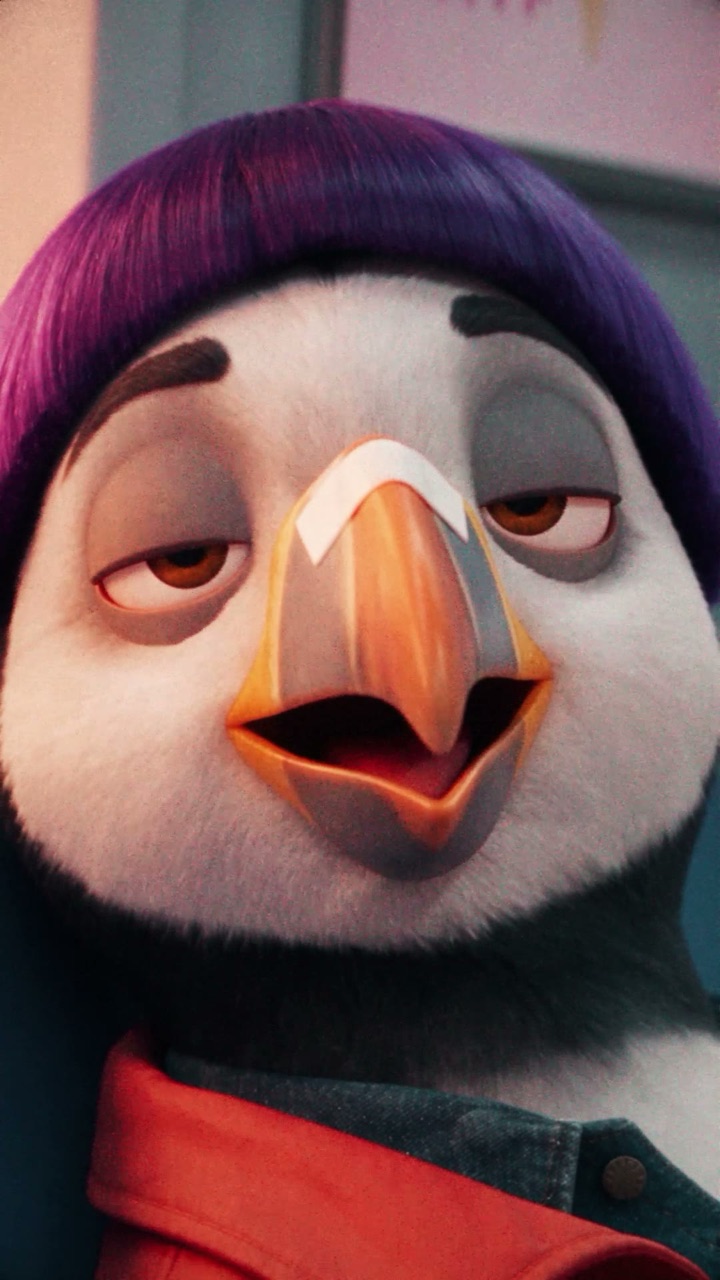
Every story about Puffin ends the same way. Someone looks at the clock, someone reaches for their coat, someone says, right, shall we head home? And Puffin, half asleep and completely content, says the thing he always says.
Nah… just one more.
People think it’s a joke. A lazy bird’s catchphrase. It isn’t. It’s a promise he made a long time ago, on a cold August night, under a streetlamp, in a cardboard box.
The cliff
Puffin was born in a burrow at the top of a cliff on an island off the south coast of Iceland. A burrow is not glamorous. It is a tunnel in the turf, dug by your parents, lined with a bit of grass and a few feathers. For the first weeks of his life, Puffin’s whole world was about the length of a loaf of bread and smelled strongly of fish.
He didn’t mind. Twice a day, sometimes more, a shadow would block the light at the end of the tunnel and one of his parents would come in with a row of silver fish hanging crosswise from their beak, neat as a moustache. Outside, he could hear the wind, the sea and a thousand other puffins doing exactly the same thing.
His grandmother lived three burrows along. Everyone called her Amma, which is simply the Icelandic word for grandma, and she had been coming back to that cliff for more summers than anyone could count. She had a faded beak, a crooked foot and opinions about everything.
One evening, when Puffin was big enough to poke his head out of the tunnel, Amma sat beside him and watched the sun slide towards the sea without quite touching it. Iceland in summer does that. The sun goes down so slowly that it seems to change its mind.
„Soon you’ll leave this cliff,“ Amma said. „When it’s time, go. But listen to me, little one. Never leave a good moment one second earlier than you have to.“
Puffin didn’t understand it then. He thought it was just something grandmothers say.
The night of leaving
Here is something true about real puffins, and it’s the most important part of this story. When a young puffin – a puffling – is ready to leave home, it doesn’t go during the day. It waits for darkness. Then, alone, without its parents, it walks to the edge of the cliff, opens its wings for the very first time and flies towards the sea.
Nobody teaches it. Nobody comes along. Pufflings are thought to navigate by the faint light of the night sky reflecting on the water. Go towards the light, the instinct says. The light is the sea.
But on Puffin’s island there was a town. And in the town there were streetlamps, kitchen windows, a harbour with its lights on all night, and a bakery where somebody started work at four in the morning.
So when Puffin jumped – heart pounding, wings working much harder than he’d expected – he flew towards the brightest light he could see. It was not the sea.
It was a streetlamp on a quiet road, two minutes from the bakery.
He landed on the tarmac with a soft, undignified bump. Around him were houses, parked cars, a bicycle leaning against a fence. No waves. No cliff. No Amma. Just the lamp humming above him and a warm smell of bread coming from somewhere. For the first time in his life, Puffin was completely lost.
And here’s the strange thing. He wasn’t afraid. He sat under that lamp and looked at the lit windows, the shadows moving behind them, the yellow glow on the wet road, and he thought: oh. So this is what the night looks like from the inside.
The cardboard box
On Puffin’s island, this happens every year, and the people who live there know it. At the end of summer, when pufflings start leaving their burrows, children go out in the evenings with torches and cardboard boxes. They look under cars, along harbour walls, in gardens and doorways, and they gently collect the young birds that followed the town lights by mistake.
The pufflings spend the night safe in the boxes. In the morning, the children carry them to the shore and help them on their way – out over the water, towards the sea where they were always meant to go.
Puffin was found at half past one in the morning by a girl in a yellow raincoat and wellies two sizes too big. She crouched down, said something in Icelandic that sounded kind, and lifted him into a box that had once held bananas.
She took him home. She put the box by the radiator. She did not go to sleep.
Puffin could hear her through the cardboard, sitting on the kitchen floor and humming to herself. Every now and then the lid would open a crack, an eye would look in, and the lid would close again. Her mother came into the kitchen at some point and told her to go to bed. The girl said, just five more minutes. Her mother laughed and sat down next to her.
Through a gap in the box, Puffin watched the two of them sharing a slice of bread with butter at three in the morning, talking quietly, the kitchen light making a small warm island in the dark house. Nobody was in a hurry. Nobody wanted the night to end.
That was the moment. If you ask Puffin when he first understood Amma, that’s what he’ll tell you. A kitchen floor. A banana box. Two people who knew they’d be tired in the morning and stayed up anyway, because the moment was good and it wouldn’t come back.
The sea
In the morning the girl carried him down to the shore. The sky was grey and pink at the same time, the way it often is up there. She held him in both hands, said one more kind thing in Icelandic, and lifted him towards the water.
Puffin flew. Properly, this time – low over the waves, out and out until the island was just a dark shape behind him. He did what puffins do. He spent years at sea. He learned to dive, to swim with his wings, to ride out storms, to sleep floating on the swell. Most young puffins don’t come back to land for the first few years of their lives, and he was no exception.
But he never forgot the lights.
Out on the dark Atlantic, on the clearest nights, he’d sometimes see a glow on the horizon – a ship, a lighthouse, a town on a faraway coast – and he’d remember the streetlamp, the bread, the kitchen floor. He’d remember the girl saying five more minutes.
The city
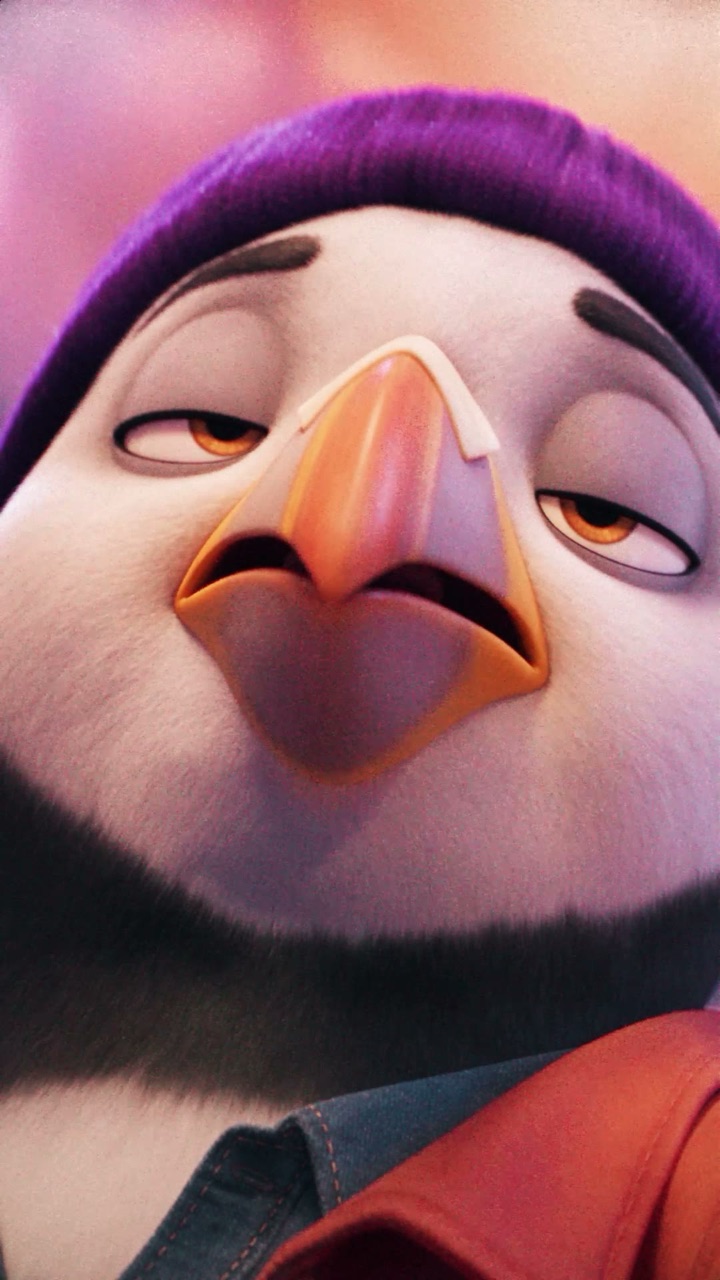
Eventually, of course, Puffin did something no sensible seabird would do. He came back to land and moved to the city. He bought a purple beanie because his head got cold. He found an orange jacket at a flea market, two sizes too big, and decided it was perfect. He learned the night bus routes, the pizzeria that keeps its oven warm after closing, the old amusement park where the last ride of the evening is always the best.
He’s not lazy, whatever people say. He’s just very, very careful not to leave a good moment one second earlier than he has to.
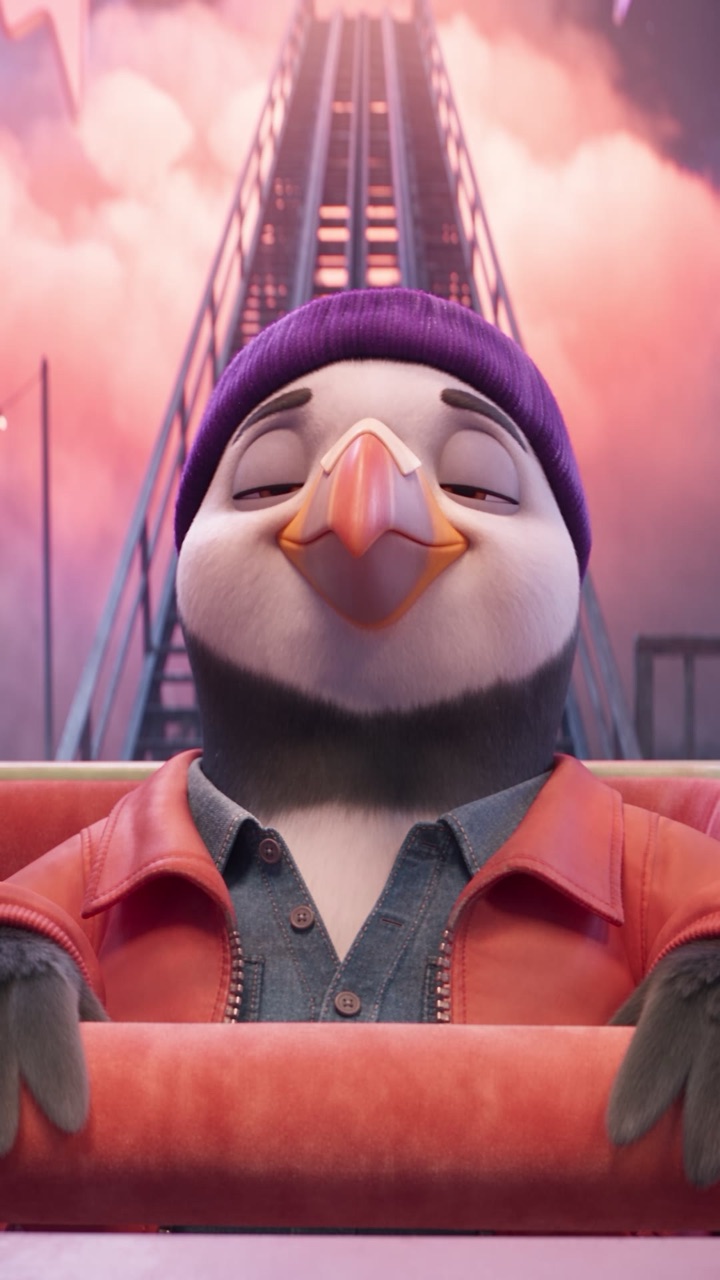
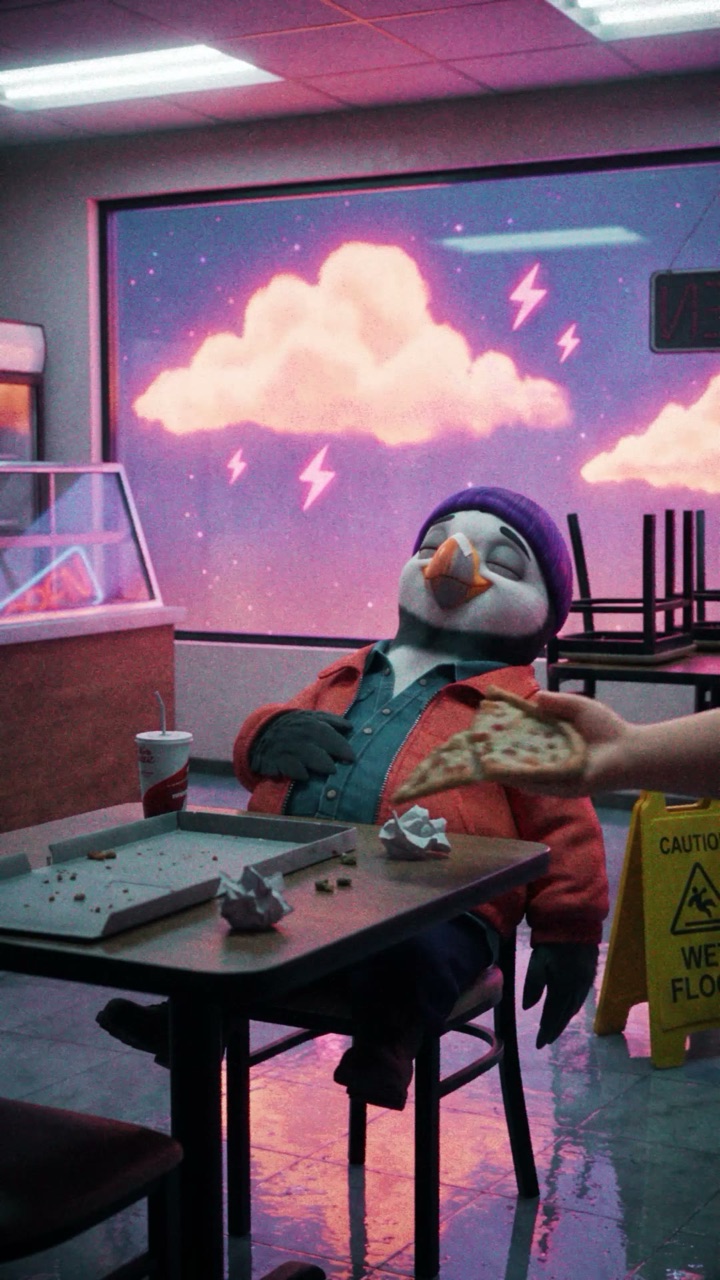
That’s why he takes one more stop on the night metro, because the carriage is quiet and the city is sliding past the window like a film. That’s why he stays for one more slice, because the owner has finally sat down and started telling stories. That’s why he rides the old coaster one more time, because the fairy lights are on and in an hour they won’t be.
„One more doesn’t mean more of everything,“ Puffin says. „It means: don’t rush the good bit. It’s the good bit.“
Sometimes, when he falls asleep in a strange place – a metro seat, a pizzeria booth, the front car of a roller coaster – he dreams of the island. Of Amma on the cliff, watching a sun that refuses to set. Of a girl in a yellow raincoat who stayed up all night with a stranger in a banana box.
And then someone taps him on the shoulder and says, come on, Puffin, it’s late, time to go home.
And you know what he says.
The real pufflings
The heart of this story is real. On Heimaey, the largest of the Westman Islands (Vestmannaeyjar) off Iceland’s south coast, young puffins leave their burrows at night, usually from around mid-August into September. Many are confused by the town lights and land in streets and gardens instead of the sea. For generations, local families – especially children – have gone out in the evenings to find them, keep them safe overnight in cardboard boxes and release them by the sea the next day.
If you’re ever on the island in that season, follow the guidance of local residents and the people who look after the birds. Handle pufflings as little as possible, never take them away from the island, and let the locals show you how it’s done. You can read more about puffins in our pieces on real puffin facts and where to see them in Europe.
And next time someone reaches for their coat a little too early, you’ll know what to say.